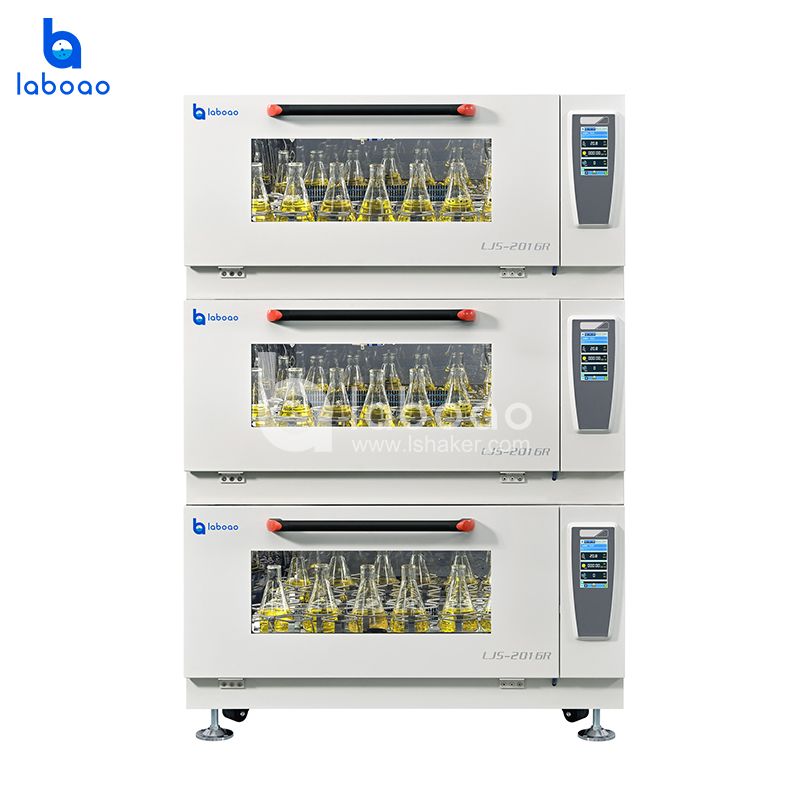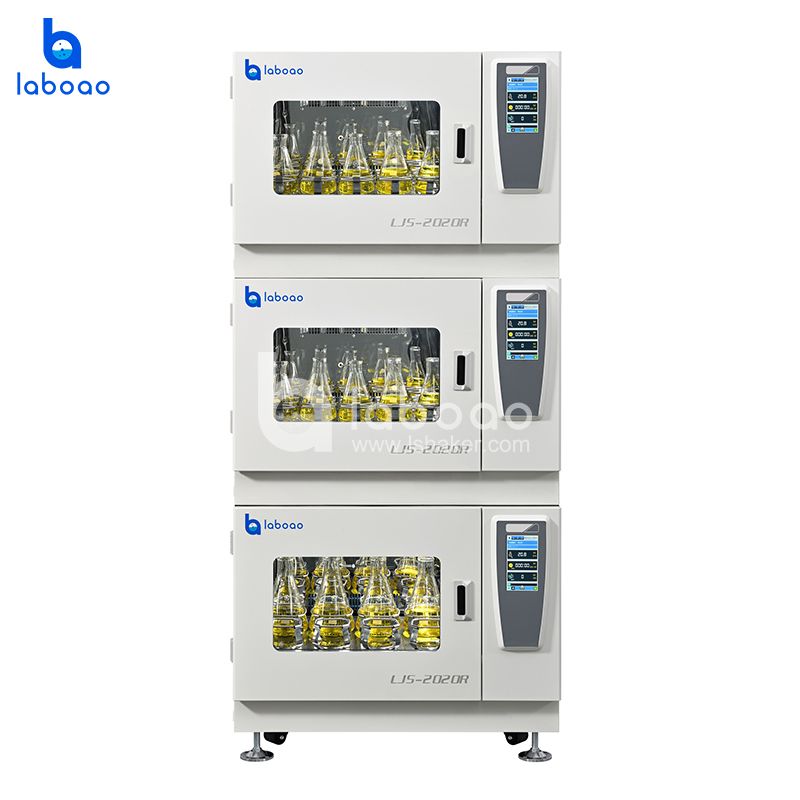
Thermostatic shakers are devices used for the suspension culture of bacteria or cells. While standard bacterial shakers typically feature agitation and constant temperature control, cell shakers incorporate additional controls for humidity and CO2 concentration. To optimize the cultivation performance of these shakers, it is important to understand how temperature control affects the culture process.
I. Key Impacts on Microbial Cultivation
1. Impact of temperature on fermentation:
Temperature control is crucial to the fermentation process. Microorganisms generally thrive at temperatures between 20°C and 35°C. Temperatures that are too high or too low can cause microbial inactivation or even death. While rising temperatures can accelerate enzymatic reactions and promote growth and metabolism, excessive heat leads to enzyme inactivation, thereby hindering product formation. Consequently, the optimal temperature must be set according to the specific product requirements to ensure a smooth fermentation process. Temperature also influences the physical properties of the fermentation broth—such as viscosity, as well as the solubility and mass transfer rates of substrates and oxygen—factors that ultimately dictate fermentation kinetics and product biosynthesis.
2. Impact of temperature on enzyme system composition and characteristics:
Temperature fluctuations affect enzyme activity. For instance, enzymes produced at 55°C retain 88%–99% of their activity after exposure to 90°C for 60 minutes, whereas enzymes produced at 35°C retain only 6%–10% of their activity under identical conditions; this demonstrates the significant impact of temperature on enzyme stability and activity.
3. Impact of temperature on microbial metabolites:
Microorganisms produce different metabolites depending on the temperature conditions. For example, when Streptomyces aureofaciens is fermented at temperatures below 30°C, the synthesis of chlortetracycline increases; conversely, raising the fermentation temperature favors tetracycline synthesis, whereas at 35°C, chlortetracycline synthesis virtually ceases. This demonstrates that temperature directly influences the types and quantities of metabolic products.
II. Key Impacts on Cell Culture
1. Constant temperature promotes cell growth and metabolism:
Thermostatic shakers ensure normal cell growth and metabolism by maintaining the constant temperature required for cell culture. This constant thermal environment provides a stable foundation that facilitates cell growth and proliferation. A temperature rise of just 1°C above physiological levels can adversely affect cell growth.
2. Appropriate temperature facilitates oxygen supply and culture mixing:
The shaking function of thermostatic shakers promotes cell growth and culture uniformity by enhancing oxygen supply and mixing the culture. This mixing ensures the even distribution of nutrients, thereby improving conditions for cell growth.
3. Simulation of the *in vivo* environment:
Thermostatic shaking incubators can simulate in vivo conditions—such as temperature, humidity, and gas composition—providing a suitable environment for culturing and studying cells. By adjusting parameters like temperature, speed, and shaking amplitude, researchers can simulate conditions corresponding to various physiological states to study cell growth, differentiation, and function.
In summary, temperature control in thermostatic shakers has multifaceted effects on cell culture; it not only promotes cell growth and metabolism but also influences enzyme characteristics and the production of metabolites, thereby providing an efficient and stable experimental environment for cell culture and cell biology research.